


Starmer Faces Fresh Labour Rebellion Over Plans to Extend the Porn Ban
Published: 20 April 2026 | Category: UK Politics | Reading time: 8 minutes

Keir Starmer is facing one of the most uncomfortable internal rows of his premiership, with a significant number of his own female MPs threatening to break ranks over the government’s handling of plans to extend the ban on harmful online pornography. The rebellion centres on a part of the Crime and Policing Bill that critics say has left a glaring and morally indefensible gap in the law — and Labour MPs are making clear they will not simply vote as they are told and move on.
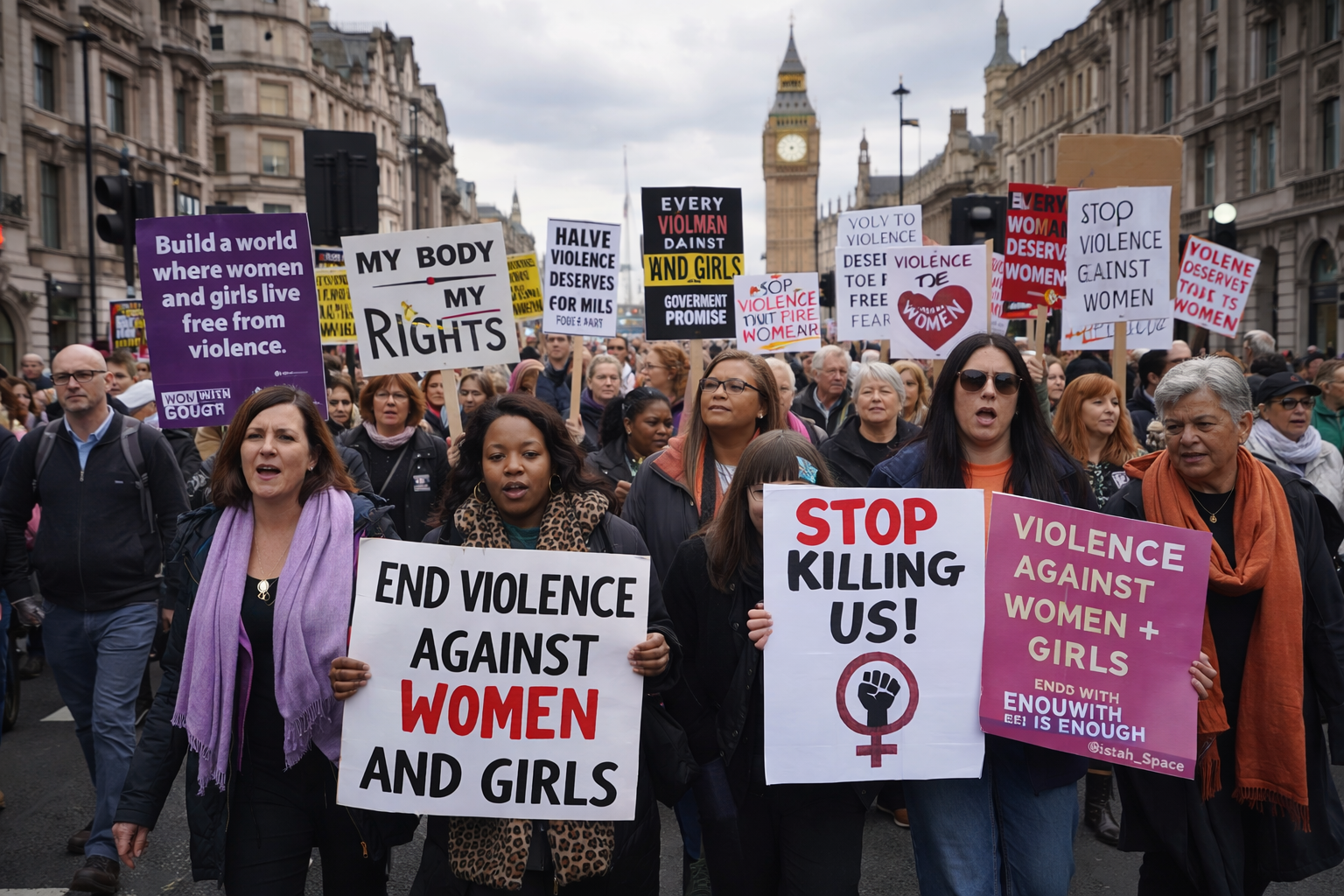
The issue has exposed a genuine tension inside the government between its stated commitment to halving violence against women and girls (VAWG) within a decade and its instinct to resist being pushed into legislation it regards as legally complicated. For the women on its own benches who have spent years campaigning for tougher online pornography laws, that tension has finally reached breaking point.
How We Got Here: The Bertin Review and What It Found

To understand the rebellion, you first need to understand the review that sparked it. In 2023, the previous Conservative government appointed Baroness Gabby Bertin as Independent Lead Reviewer to examine the regulation, legislation and enforcement of online pornography. Her final report found that online pornography can impact people’s health and mental wellbeing and is potentially fuelling violence against women and girls offline. The review made the case for bringing the regulation of online pornography into parity with what is already banned in the offline world. UK Parliament
The review made 32 recommendations in total, including banning degrading, violent and misogynistic content. It found that content which is banned offline is still freely available online, and that the gap between the two sets of rules has allowed an explosion of harmful material to spread largely unchecked. MKFM
The Starmer government has accepted parts of this. Ministers already backed a ban on strangulation pornography, which the review found was establishing non-fatal strangulation as a sexual norm among young people. Non-fatal strangulation is an offence in its own right, but it is not currently illegal to show it online. That new offence is being included in the Crime and Policing Bill making its way through Parliament. MKFM
But it is what the government has not backed — or initially refused to back — that has caused the rebellion to build.
The Step-Incest Row That Has Ministers Scrambling
The flashpoint is the question of step-incest pornography — content depicting sexual acts between step-relatives. The government wrote into the bill a ban on possessing or publishing pornographic images of sex between blood relatives, but when it came to step-relationships, ministers drew the line. Justice minister Baroness Levitt explained that the offence would not extend to step-relationships because, while they are “controversial,” such relationships are not illegal in real life. MKFM
That distinction did not go down well.
Baroness Bertin tabled an amendment in the House of Lords calling for step-incest to be included in the ban. It passed by 144 votes to 143, a margin of a single vote, meaning it will now face a vote in the Commons. And Sky News understands that a “significant number” of female Labour MPs are prepared to rebel if the government does not back a ban. One senior MP told the broadcaster the government’s argument “doesn’t pass the sniff test” — pointing out that half of all sexual abuse cases against children are perpetrated by step-parents. MKFM
MPs told Sky News the government had “lost the plot” if it thought they would “go through the lobby voting to keep step-incest porn.” MKFM When your own MPs are saying that out loud to journalists, a U-turn usually follows. And it did.
The Government Climbs Down — But Questions Remain

After weeks of what sources described as constructive discussions, with ministers said to have “heard the voice of parliament” and recognised “this was a political and moral issue,” the government announced it would extend the ban to cover step-incest pornography in cases where one of the persons depicted is portrayed as being under 18. It also moved to criminalise the possession or publication of pornography depicting an adult credibly role-playing as a child. This is the Coast
Labour MP Jess Asato, who has campaigned on this issue for years, welcomed the changes. She said: “Step-incest pornography and that which depicts performers as children is abhorrent. Alongside banning strangulation in pornography, tackling this vile content will make our country a safer place for women and children.” This is the Coast
Tracy Gilbert, Labour MP for Edinburgh North and Leith, called the outcome “a victory for the survivors who have bravely called for these reforms.” This is the Coast
The new measures mean the UK could have some of the strongest regulations of online pornography in the world, MPs told Sky News. This is the Coast That is a significant claim. If it holds up in practice, it will represent a genuine achievement — delivered not because the government planned it that way from the start, but because its own MPs threatened to make life extremely difficult if it did not act.
That is not a comfortable position for any government to be in.
Age Verification and Consent: The Battle That Is Still to Come
The step-incest row is, in many ways, a symptom of a wider problem. The government has been navigating multiple demands from Baroness Bertin’s 32 recommendations all at once, and not all of them have been dealt with as quickly as campaigners would like.
One of the most significant outstanding issues is age and consent verification for pornography platforms. Lords amendment 264, tabled by Baroness Bertin, would make it an offence for platforms to publish pornographic content without verifying that every individual appearing in it has given their consent, has been verified as an adult, and that such verification was completed before the content was created. The maximum penalty proposed would be imprisonment for up to two years or a fine, with civil sanctions of up to £18 million or 10 per cent of qualifying worldwide revenue for platforms that fail to comply. GOV.UK
The government has acknowledged the need to introduce further safeguards in this area to protect vulnerable people from sexual exploitation. However, it has argued that it is first necessary to examine what additional safeguards should be put in place and what enforcement mechanisms are appropriate, including whether to use an existing regulator or establish a new one. Rather than accepting the Lords amendment directly, ministers have introduced a duty on the Secretary of State to lay a report before Parliament within 12 months of Royal Assent reviewing the issue. GOV.UK
To critics, that means another review, another report, and another year of delay on something the Bertin review already examined in considerable depth. One response from online safety campaigners called the government’s approach “extremely disappointing,” arguing that ignoring the substance of the recommendations and kicking implementation into the long grass was inadequate given the comprehensive nature of Bertin’s work. Onlinesafetyact
What the VAWG Mission Demands — and What the Government Is Delivering
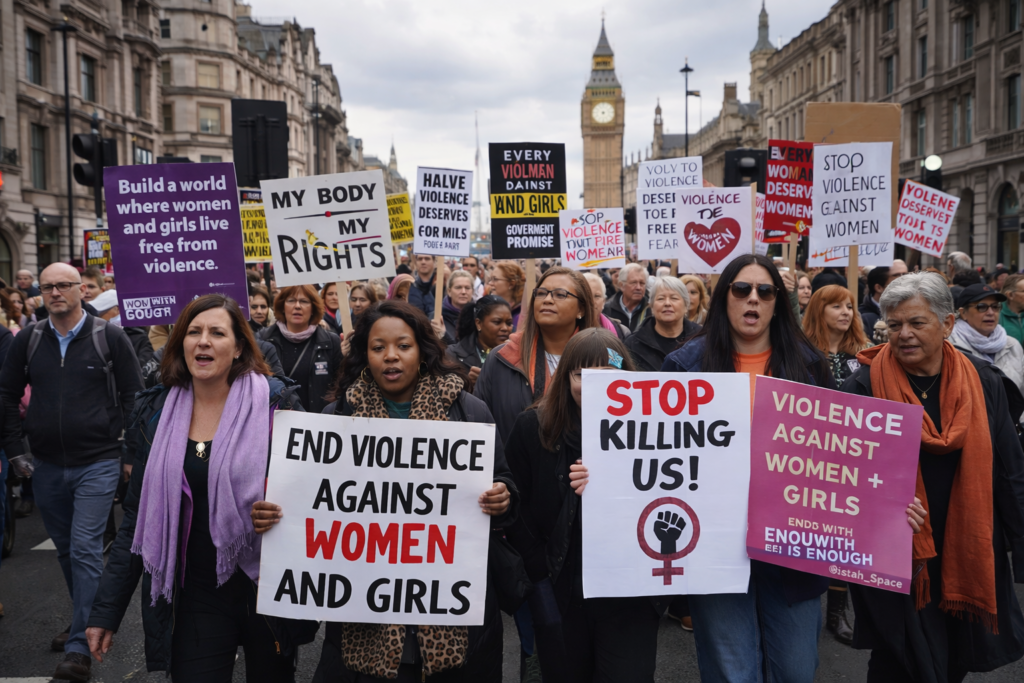
Starmer came to office with a bold personal commitment. As a former Director of Public Prosecutions who spent years working on violence against women cases, he said he had seen first-hand the devastation such abuse causes. His government set a target of halving violence against women and girls within a decade — a mission that campaigners welcomed but said would need bold action to deliver.
Cross-party calls to regulate online pornography have been framed explicitly as part of delivering that mission. The argument is straightforward: content that normalises violence, strangulation and degradation shapes attitudes and behaviours, and the law should treat it the same whether it is being distributed online or offline. MKFM
The government has said this itself. In its own press releases it has described viewing and sharing illegal intimate images as “vile and dangerous” and stated that those who post or promote such content are contributing to a culture of violence and abuse that has no place in society. GOV.UK
The difficulty is that the rhetoric has repeatedly run ahead of the legislation. When ministers say they want to halve violence against women and girls but then resist specific amendments that would directly tackle harmful content, their own MPs notice the gap. And increasingly, they are refusing to stay quiet about it.
The Conservative Angle: Another U-Turn, Another Point Scored
Shadow technology secretary Julia Lopez was quick to point out the pattern, saying that it was the Conservatives who have been clear throughout and accusing the government of “playing catch-up to duck a major backbench rebellion.” She said: “The reality is that, for all the Prime Minister’s tough rhetoric, he has arrived late to this issue. He does not know what to believe — he only knows what to do to try and survive another week.” LBC
It is a familiar charge, and it stings partly because it contains a grain of truth. The government has now been forced into changes on this Bill that it initially opposed, following pressure from the Lords, from its own backbenchers, and from campaigners outside Parliament. That is how the legislative process is supposed to work in theory. In practice, being repeatedly dragged to a position rather than leading from the front is not a great look for a government that positioned itself as a champion of women’s safety.
Where Things Stand Now
The Crime and Policing Bill, described by Home Office minister Sarah Jones as “the largest criminal justice Bill in a generation,” AOL is still making its way through Parliament and both Houses must agree the final draft before it becomes law. The Lords have inflicted multiple defeats on the government during its passage, and not all of those defeats have yet been resolved.
What is clear is that the pressure on ministers to go further on online pornography regulation is not going to ease. The Bertin review laid out 32 recommendations. The government has acted on some, delayed others and deferred decisions on others still. For the Labour MPs who threatened rebellion — and for the campaigners who have been working on this for years — that is not a satisfactory position.
The government has a mission it set for itself. It has the parliamentary numbers to deliver it. The question is whether it has the political will to get there without needing its own backbenchers to force its hand every step of the way.